
How to Build a Thriving Koi Pond in the Southern California Heat
Critical engineering tactics for maintaining 72°F water stability, high dissolved oxygen, and predator protection during 100°F+ inland summers.
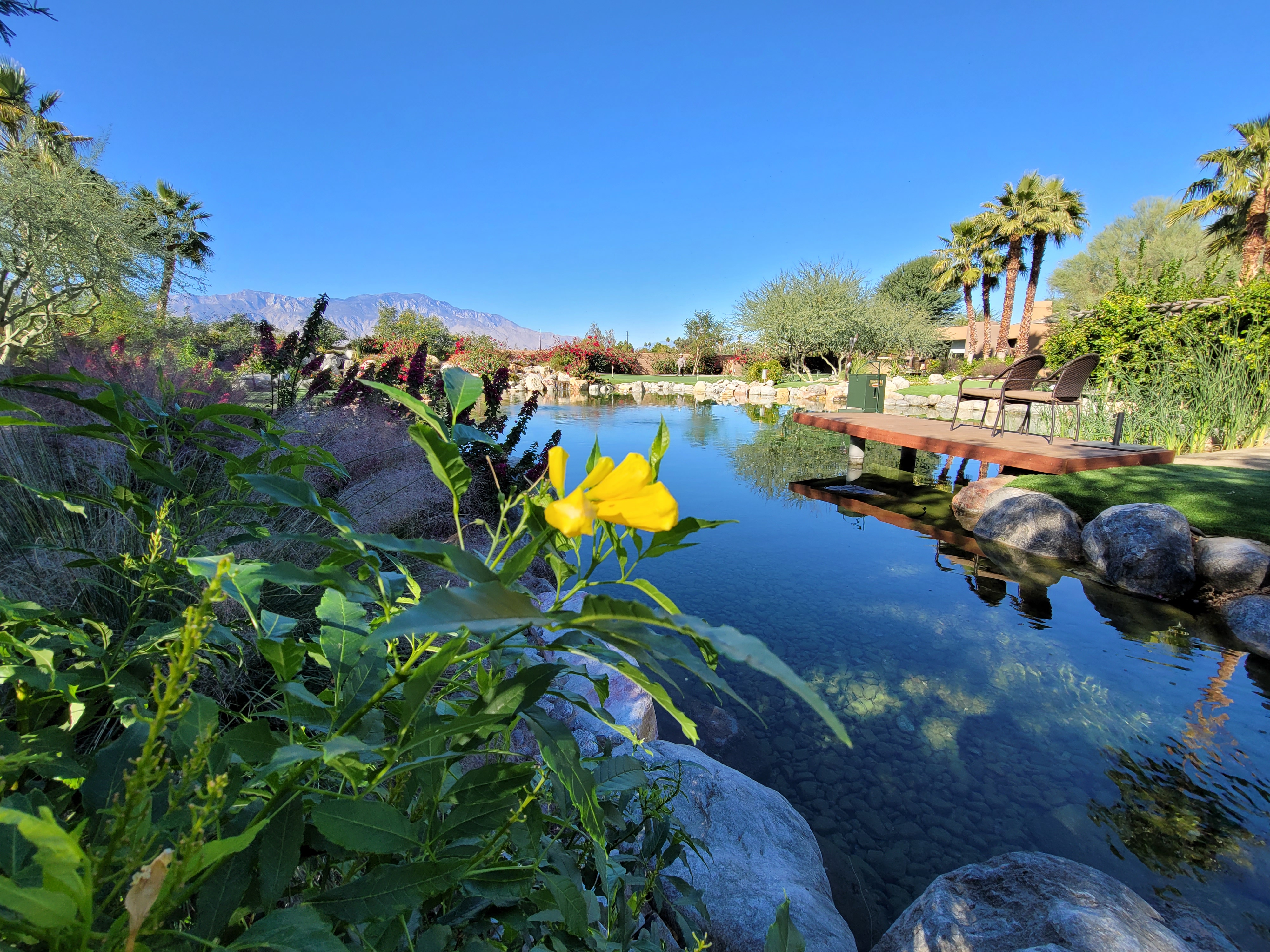
- Depth is thermal armor: 4 to 5 feet minimum prevents rapid temperature spikes.
- High-volume bottom aeration keeps dissolved oxygen high when hot water naturally sheds oxygen.
- Submerged rock caves protect prized koi from aerial raptors and heat alike.
- Wetland bog filtration outpaces mechanical canister filters in hot climates.
Designing a koi pond in Southern California—from the inland valleys of Corona and Murrieta to the low desert of Palm Springs—presents distinct biological challenges. When air temperatures surpass 105°F, water can heat up rapidly, triggering algae blooms and suffocating fish as warm water loses its ability to hold dissolved oxygen.
The first line of defense is depth. Shallow two-foot ponds act like heat sinks. By excavating to 4 to 5 feet, we create a thermal stratification layer where water stays significantly cooler at the bottom.
The second pillar is massive aeration and turnover. We incorporate high-output sub-surface aerators and biological bio-falls that turn over the entire volume of the pond every 45 to 60 minutes. As water crashes over multi-tier waterfalls, it absorbs ambient oxygen and expels trapped thermal gases.
Finally, shade and natural stone architecture. We build cantilevered granite rock shelves and deep underwater fish caves. Prized Japanese Nishikigoi retreat into these cool, shaded caverns during midday sun, staying completely relaxed and protected from predators.
Ready to explore this on your California property?
We provide comprehensive on-site topographical analysis and 3D hydraulic design consultations across Temecula, De Luz, La Cresta, and Palm Springs.
Book On-Site Design ConsultationArticle Q&A: How to Build a Thriving Koi Pond in the Southern California Heat
Focused answers addressing the specific mechanics explored in this article.
Koi thrive best between 65°F and 75°F. While they can tolerate temperatures up to 85°F, prolonged water temperatures above 80°F cause stress and oxygen depletion unless heavy aeration is in place.
Koi Pond Heat-Design Knowledge Check
Test what you just learned — 7 quick questions, scored instantly with full explanations.